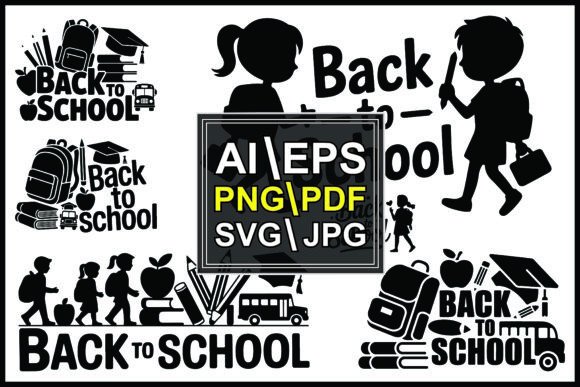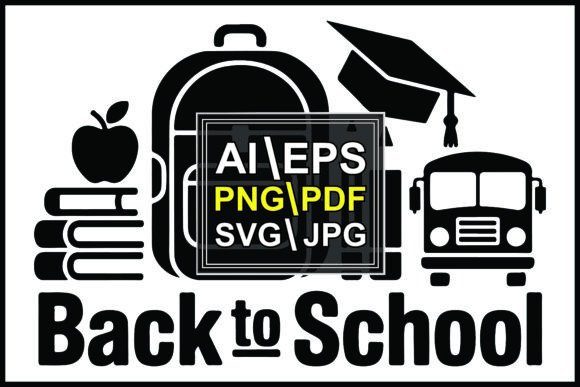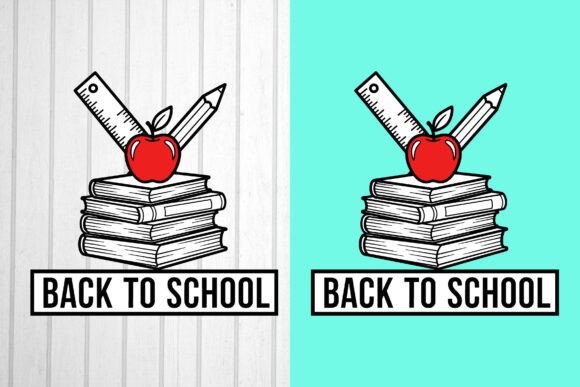
Back to School Illustration with Apple
You have likely seen the classic imagery of a red apple on a desk, but when you strip away the color and reduce it to a clean, stylized black and white graphic, something different happens. The Back to School Illustration with Apple becomes more than just a symbol; it transforms into a versatile design element that cuts through visual noise. This specific composition—an apple balanced on a stack of books with two pencils crossed behind it—offers a timeless aesthetic that works perfectly for educational themes, back-to-school promotions, or school-related events. However, simply downloading an image is not enough. Many creators and business owners make critical errors in how they select, format, and apply these assets, which can undermine their marketing efforts or ruin a print project.
The appeal of this design lies in its simplicity. By removing color distractions, the illustration focuses entirely on the geometry and balance of the objects. It signals "education" immediately without needing text. Yet, the difference between a professional-looking campaign and a sloppy one often comes down to file integrity and format selection. If you are planning to use this graphic for a flyer, a website banner, or a t-shirt design, understanding the technical specifications is just as important as the artistic vision.
The Hidden Pitfalls of Vector and Raster Confusion
One of the most common mistakes people make when sourcing graphics like the Back to School Illustration with Apple is assuming all files are created equal. You might find a cheap download that looks fine on your screen but turns out to be a low-resolution raster image (like a JPG) when you try to print it. When you scale up a standard JPEG to fit a large poster or a billboard, the image pixelates, becoming blurry and unprofessional. This error costs money in wasted print runs and damages your brand's credibility.
To avoid this, you must verify that the asset includes scalable vector formats. A high-quality package should provide EPS and SVG files. These formats allow you to resize the illustration from a tiny icon on a mobile app to a massive backdrop on a classroom wall without any loss of quality. The lines remain crisp, and the curves stay smooth. If a provider only offers PNG or JPG files, you are limiting your ability to use the design effectively across different media. Always check the file details before hitting the purchase button to ensure you have the flexibility needed for both digital and physical applications.
Overlooking File Compatibility and Workflow Efficiency
Another frequent oversight involves software compatibility. You might buy a beautiful illustration only to realize later that your preferred design tool cannot open the provided format. While modern software has improved, legacy projects or specific industry standards sometimes require DXF files for laser cutting or CNC machining, or PDFs for direct printing workflows. Ignoring these requirements can lead to hours of frustration trying to convert files, which often results in degraded quality or broken paths.
A robust solution is to look for a comprehensive bundle that includes a wide range of formats: EPS, SVG, PNG, JPG, PDF, and DXF. Having access to all these variations means you can adapt the Back to School Illustration with Apple to almost any situation. For instance, you can use the SVG for responsive web design where fast loading times are crucial, switch to the PDF for sending proofs to a printer, and utilize the DXF if you are creating physical signage. This versatility saves time and ensures that your workflow remains efficient, allowing you to focus on creativity rather than technical troubleshooting.
Evaluating Resolution and Print Readiness
When dealing with print materials, resolution is non-negotiable. A file that looks sharp on a 4K monitor might be insufficient for high-definition offset printing. High-resolution files are essential for ensuring that the fine details of the crossed pencils and the texture of the book stack remain visible. If you choose a low-quality source, the final product may appear washed out or jagged, making your promotion look amateurish. Before committing to a design, ask yourself: Is this file ready for print? Does it support the necessary color profiles and DPI settings? Ensuring the answer is yes prevents costly reprints and ensures your message is communicated clearly.
Strategic Application in Marketing and Education
Once you have secured the right files, the next step is application. The beauty of this specific illustration is its neutrality. Because it is black and white, it does not clash with existing brand colors. You can overlay your company logo or promotional text without worrying about color harmony issues. This makes it an ideal choice for educators creating lesson plans, entrepreneurs launching school supply sales, or bloggers writing about academic trends.
However, do not underestimate the power of context. Placing this graphic on a cluttered background can obscure its meaning. The apple balanced on books represents knowledge and foundation, while the crossed pencils suggest preparation and action. To maximize impact, give the illustration breathing room. Use negative space to let the design stand out. Whether you are designing a newsletter header or a social media post, ensure the focal point remains clear. A well-placed, high-quality graphic speaks louder than a thousand words, guiding the viewer's eye exactly where you want it to go.
Verifying Quality Before You Commit
Before you finalize your decision on any asset, take a moment to inspect the preview images closely. Look at the corners of the apple and the intersection of the pencils. Are the lines clean, or do they show aliasing artifacts? Check the file descriptions to confirm that the design is indeed compatible with popular design software. Many users skip this step and end up with files that require expensive conversion tools or manual tracing. By being diligent during the evaluation phase, you protect your investment and ensure that the final output matches your expectations.
In summary, the Back to School Illustration with Apple is a powerful tool for visual communication, but its effectiveness depends on your technical choices. Avoid the trap of settling for low-resolution or incompatible files. Instead, seek out a complete package that offers high-resolution, multi-format support including EPS, SVG, PNG, JPG, PDF, and DXF. This approach guarantees that your designs will look professional whether they appear on a digital screen or in print. By focusing on quality and versatility, you ensure that your educational or promotional materials resonate with your audience and achieve the desired results.